
Home
About Us
Product Showcase
News
Engineering Cases
Service Support
Solutions
Talent Recruitment
SOYO Mall
Contact Us
Leave a message
Language:en

1 Eleven departments jointly issued a notice: “Digital+” gives new vitality to the cultural and tourism industry
Summary : A series of policies have accelerated the integration of digital technology into the cultural tourism industry. It is evident that the organic integration of digital technology will become an important direction for promoting the high-quality development of the cultural tourism industry in the current and future period.
2024-04-28
Recently, eleven departments jointly issued the "Notice on Carrying out the Special Action for 'Signal Upgrade'" (hereinafter referred to as the "Notice"), proposing that by the end of 2024, more than 80,000 key locations will achieve deep mobile network coverage. In the cultural and tourism scenarios, the Notice clarifies that it will continue to improve mobile network signal coverage in national 5A/4A-level tourist attractions, national second-level and above museums, national tourist resorts, national nighttime cultural and tourism consumption clusters, red education bases, etc., and support scenic areas in carrying out applications such as 4K/8K video, smart guides, and VR/AR immersive tourism. In addition, in the "Industrial Structure Adjustment Guidance Catalog (2024 Edition)" (hereinafter referred to as the "Catalog") recently revised and released by the National Development and Reform Commission, new cultural industry formats such as immersive experiences, digital music, and wearable smart cultural devices have been included in the encouraged category of the Catalog.
A series of policies have accelerated the integration of digital technology into the cultural tourism industry. It can be seen that the organic integration of digital technology will become an important direction for promoting the high-quality development of the cultural tourism industry in the current and future period.
Digital technology empowers cultural dissemination and display
At present, the pace of digital transformation in the cultural industry and tourism is accelerating, and the application of new technologies such as big data, the metaverse, and artificial intelligence has become a normalized technical means. The superposition of the display and dissemination of culture and art with digital technology provides people with a richer cultural experience.
The Deshou Palace Site Museum in Hangzhou, which opened in November 2022, has become a "trendy" attraction in the city. Built on the original site of the Southern Song Dynasty's Deshou Palace, the museum skillfully uses digital means to help visitors understand the ruins more intuitively and appreciate the cultural beauty carried by the cultural relics. With giant screens creating an immersive space that simulates and recreates the construction process of the palace, and AR transparent screens bringing ancient life back to life... Entering the museum, visitors can see three giant screens slowly descending on the north, east, and west sides of the ruins, forming an enclosed space together with the floor screen composed of the ruins themselves. Background music and narration, accompanied by light and shadow, are projected onto the bricks, stones, and plinths, simulating and recreating the construction process of the Chonghua Hall above the ruins.
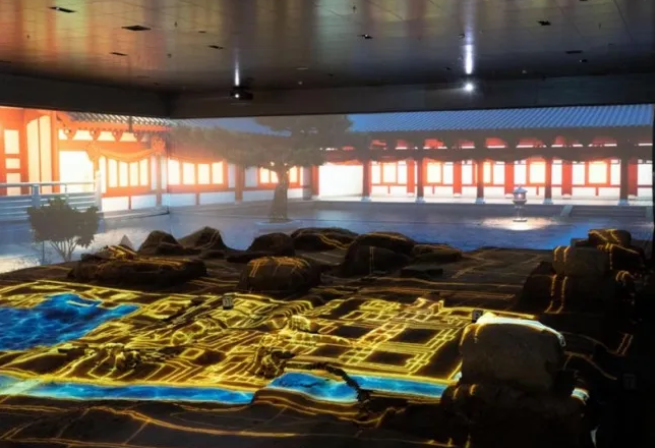
This digital exhibition, named "Deshou Chonghua," allows visitors, even those with limited knowledge of cultural relics and archaeology, to understand the site and feel the former grandeur of the palace. The digital presentation highlights the value of the site, giving the audience a sense of traveling through time.
Digitalization accelerates innovation in the cultural tourism industry
The application of digital technology in the cultural tourism sector has become the core driving force for innovative products and optimizing tourist experiences. It not only enhances the comfort of travel but also brings immersive new experiences to tourists, becoming a new growth point for cultural tourism consumption. To further promote the digital, networked, and intelligent development of the cultural tourism sector, the Ministry of Culture and Tourism issued the "Domestic Tourism Improvement Plan (2023-2025)" and announced the first batch of national pilot lists for smart tourism immersive experience new spaces and 20 demonstration cases of immersive cultural tourism new business formats. In November 2023, the Ministry of Culture and Tourism and the Ministry of Industry and Information Technology announced the first batch of 30 "5G + Smart Tourism" application pilot projects. During the three-year pilot period, these units will promote high-quality project construction, ensure sustainable operation, and drive 5G to empower and enhance the high-quality development of tourism, providing tourists with better smart tourism products. These measures reflect the efforts of relevant competent departments in promoting the digital development of culture and tourism.
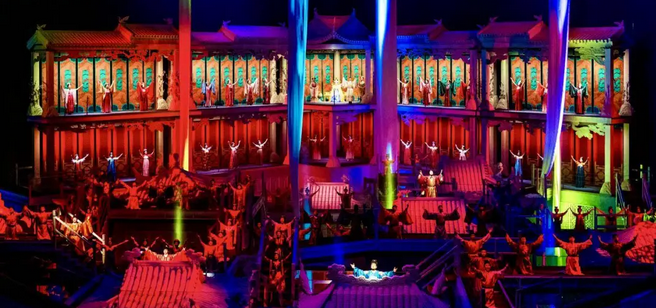
As one of the first batch of projects selected for the national pilot of new immersive experience spaces for smart tourism, the "Only Henan·Dramatic Fantasy City" smart tourism immersive experience space has recently attracted many tourists to "check in". In 2023, the scenic area received over 12 million visits for theater performances, with more than 70% of tourists coming from outside the province. During the New Year's Day holiday this year, the experience space received 25,000 tourist visits. The project uses walls to separate 21 theaters and landscape courtyards of different styles, allowing tourists to walk between theaters and courtyards and enter drama spaces of different periods and themes for performances. LED light and shadow technology and the integrated digital control system of "sound, light, electricity, and painting" allow tourists to immersively experience the historical changes and cultural heritage of the Central Plains.
"Digital+" Infuses New Vitality into Cultural Tourism Industry
Today, the organic integration of culture and digital technology has become an important pathway for the development of the cultural industry, with continuously innovating digital technologies providing solid support for the operation and development of various cultural units and institutions.
As a leader in the tourism, cultural, and audio-visual guide display industry, Guobiao Technology has continuously innovated digital technology in recent years, from offline display methods such as wireless team explanation systems, VIP guest explanation systems, and personal self-guided tour systems, to online mobile display methods such as mobile apps and WeChat public tourism service platforms, and then to virtual reality display methods such as VR, AR, and 360° panoramic displays. Guobiao Technology provides overall solutions for smart venues, achieving wireless, digital, and intelligent guidance for museums and tourist attractions, creating an immersive tourism experience, and promoting cultural dissemination.
By leveraging "Digital+", Guobiao Technology injects new vitality into the cultural tourism industry:
Guanbiao Technology creates the VR Shatin Cultural and Art Museum, where visitors can rotate 360° to the left/right, look up or down, and enjoy a high-definition view of the Shatin cultural exhibition with no blind spots, experiencing the charm of the Lingnan Tanka culture;
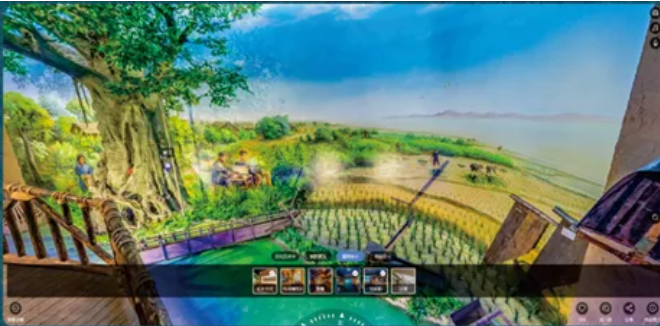
Guanbiao Technology creates an online museum, allowing visitors to immerse themselves without leaving home, converse with cultural relics, and experience history in a vivid and interesting way through multi-sensory 3D virtual reality;
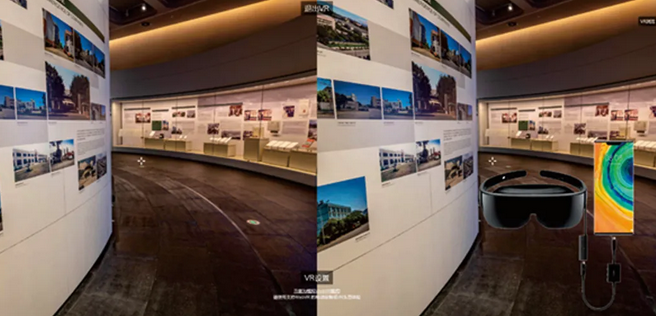
The Lin Shaoliang Memorial Hall uses Guantek Technology's VR to vividly present the creative design of "Falling Leaves Return to Roots," showcasing that while renowned Chinese entrepreneurs in ASEAN countries, especially Indonesia, achieved extraordinary success in their host countries, they remained connected to their hometowns and made selfless contributions to them.
Technology empowers tourism, creating immersive sensory new experiences, which is an effective way to meet users' diverse cultural and tourism consumption needs. Currently, innovative products for tourism destinations that integrate digital and physical elements have become an important factor driving consumption.