
Digital wireless audio · connecting smart spaces
Language / Select Language
Home
About Us
Product Showcase
News
Engineering Cases
Service Support
Solutions
Talent Recruitment
SOYO Mall
Contact Us
Leave a message

Port Connecting the World: The Guanyu District Commentary guides visitors to explore the thousand-year development trajectory of Ningbo Zhoushan Port.
Summary : SOYO Technology's zone-based explanation system leads visitors to different exhibition halls of Ningbo Zhoushan Port, exploring the port's thousand-year development trajectory.
2024-01-18
Zhoushan Port is one of the most shining business cards of Ningbo. Bustling is the norm for this port. The sea area outside the port is the only route for ships to enter and exit the core port area of Ningbo Zhoushan Port via the southern channel, where ocean-going vessels loaded with goods from all over the world converge.

Why is Zhoushan Port so busy? How has Zhoushan Port developed over the years into a major container port with an annual throughput of tens of millions of TEUs? The SOYO Technology Zone-based Explanation System answers these questions one by one for visiting tourists at the Ningbo Zhoushan Port Exhibition Hall.
Ningbo Zhoushan Port is located in the middle of the mainland coastline and on the southern flank of the "Yangtze Economic Belt". It is a first-class open port in China, a major coastal port, and an important hub in China's national comprehensive transportation system. It serves as a key domestic base for iron ore transshipment, crude oil transfer, and liquid chemical storage and transportation, as well as an important coal and grain storage and transportation base in East China. It is the core carrier for serving the Yangtze Economic Belt and building the Zhoushan Jianghai联运 Service Center, an important support for the Zhejiang Marine Economy Development Demonstration Zone and the construction of the Zhoushan Islands New Area, and a significant pillar for the economic and social development of Ningbo and Zhoushan cities.
One important reason why Ningbo Zhoushan Port has become a major port in China is its excellent water depth conditions. Currently, the world's largest 24,000-TEU container mega-ships can freely enter and leave the port, and they are frequent visitors here every week.
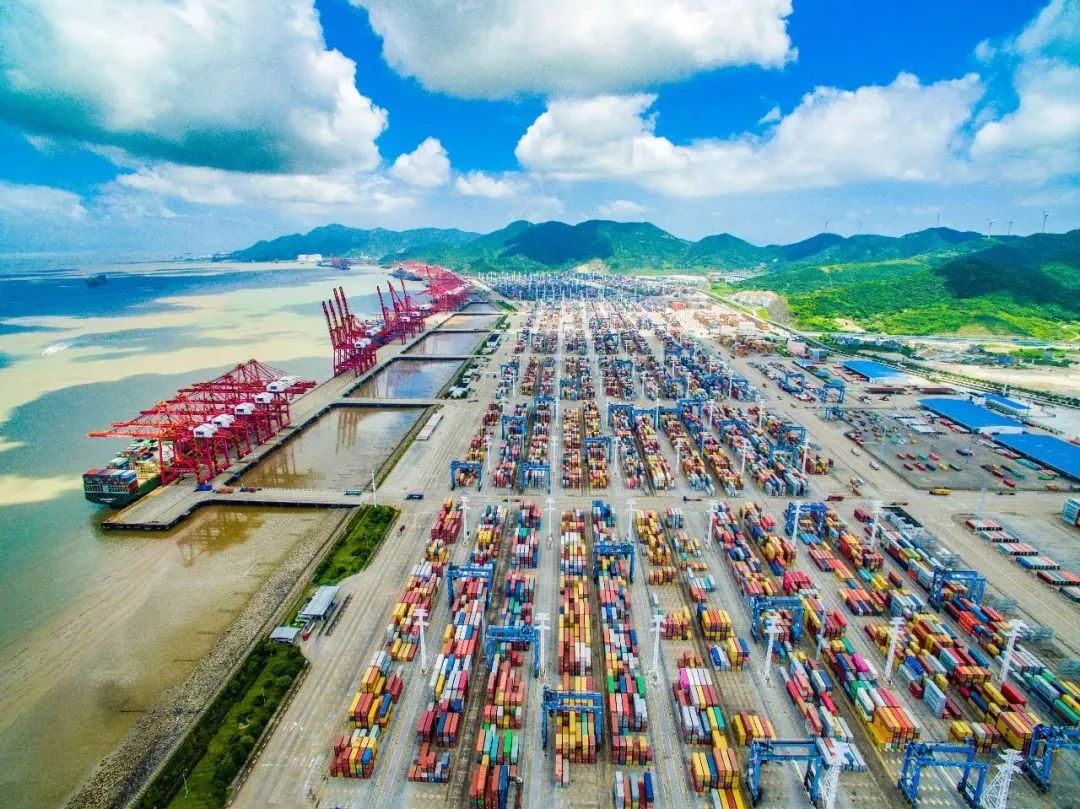
The SOYO Technology zone-based interpretation system guides visitors to different exhibition halls of Ningbo Zhoushan Port, exploring the port's thousand-year development trajectory.
The history of Ningbo Port can be traced back thousands of years. As early as 6,000 years ago, the primitive residents of Hemudu began to develop and utilize it for maritime activities. During the Spring and Autumn and Warring States periods, Gouzhang (on the bank of the Yao River) in the upper reaches of the Yong River was already a key sea route. In the Qin Dynasty, coastal residents from near and far came to Xiang County (Lishan, near today's Baozhuang) to gather goods for trade.
In 2006, the name "Ningbo Zhoushan Port" was officially adopted.
In 2015, Ningbo Zhoushan Port achieved substantive integration. Ningbo Zhoushan Port consists of 19 port areas including Zhenhai, Beilun, Daxie, Chuanshan, Meishan, Jintang, Qushan, Liuheng, Cengang, and Yangshan, with over 620 production berths, including nearly 170 large berths of 10,000-ton class or above, and more than 100 large and extra-large deep-water berths of 50,000-ton class or above. It is the port with the most frequent entry and exit of super-large vessels in China and one of the rare deep-water harbors in the world.
In 2021, Ningbo Zhoushan Port became the world's third 30-million-TEU container port after Shanghai Port and Singapore Port.
In 2022, the cargo throughput of Ningbo Zhoushan Port exceeded 1.25 billion tons, an increase of 2.1%, maintaining the world's first place for 14 consecutive years, and the container throughput reached 33.35 million TEUs, an increase of 7.3%, ranking third in the world for 5 consecutive years.

Books store the past and present, the port connects the world. With over 300 container routes linking more than 600 ports in over 200 countries and regions, Ningbo Zhoushan Port maps out a global shipping and trade network!
Image source: Internet, delete if infringement
Keywords: Zoned commentary, area commentary, zoned guide, museum commentary, zoned commentary equipment, zoned interpretation system